

Strong Bear Consulting helps church leaders build financial structures, reporting, and accountability that keep pace with organizational growth—so they can understand what is happening, make better decisions, and steward resources well.
01
Comprehensive Diagnostic
The goal is not simply to identify problems, but to understand why they developed and design something that will continue to work as the church changes.
02
Financial Blueprint Design
A future-state design showing how the church’s financial structure should reflect its locations, ministries, departments, funds, events, and other meaningful areas of activity.
03
Roadmap
Forward
A final presentation of the findings, recommendations, and implementation priorities so leadership understands not only what should change, but why.
The Problem Growing Churches Face
Churches often outgrow their financial systems gradually. A structure that worked well at one stage can become harder to use as the church adds locations, ministries, staff, funds, programs, and new reporting needs. The issue is not always whether the books are being kept correctly. Sometimes the underlying system simply has not kept pace with the organization built on top of it.-
A church can change significantly without ever stopping to redesign the financial structure underneath it.
You may have added:
New campuses or locations
Ministries and departments
Staff and leadership roles
Funds or designated giving
Events and major initiatives
Programs with their own budgets or reporting needs
Additional entities or operational complexity
Each addition makes sense on its own. Over time, though, the accounting system can become a collection of decisions made at different stages of the church’s growth.
Signs that this may be happening include:
Accounts, classes, or other categories are being used for purposes they were not originally designed for.
Similar activity is tracked differently across ministries or locations.
New programs are added by creating another workaround rather than following a consistent structure.
Leadership cannot easily compare the same ministry or activity across locations.
The chart of accounts describes the church as it existed several years ago better than the church as it operates today.
The question is not whether the church has grown “too large.” It is whether its financial architecture still reflects the organization leadership is actually trying to lead.
-
A church can have regular financial reports and still lack useful financial visibility. The issue is not simply whether reports are being produced. It is whether the right people can get the right information, understand it, and use it to make decisions without relying on manual interpretation every time.
You may recognize this if:
Reports require lengthy explanations before leadership can use them.
Important information is assembled manually in spreadsheets each month.
Budget owners receive reports but still struggle to understand what they are responsible for.
Different reports answer the same question in different ways.
Leadership cannot easily see results by location, ministry, fund, event, or responsibility area.
Key reporting depends on one person knowing how the numbers fit together.
-
Transitions often expose weaknesses that were easier to live with when everything was stable.
Strong Bear may be useful when the church is:
Changing bookkeeping providers
Hiring, replacing, or redefining finance leadership
Moving from QuickBooks to Sage Intacct or another accounting platform
Adding a campus, location, or legal entity
Reorganizing ministries, departments, or leadership responsibilities
Preparing for a significant new initiative or stage of growth
Trying to improve board, elder, or executive visibility into the finances
These moments create both risk and opportunity. A transition can preserve old workarounds in a new system—or it can be used to redesign the financial structure around how the church actually operates today.
The goal is not change for its own sake. It is to make sure the next version of the system is built intentionally rather than carrying forward problems that have already become difficult to manage.
-
Bookkeeping can be getting done while important financial responsibilities still fall between roles.
You may recognize this if:
No one clearly owns the design and maintenance of the overall financial structure.
Coding decisions are made inconsistently or depend on informal knowledge.
Bookkeeping, finance, operations, and executive leadership have overlapping responsibilities.
Leadership reports depend heavily on one person to assemble or interpret them.
Budget owners are unsure who to ask when the system does not reflect what they need.
Financial analysis, forecasting, reporting, and transaction processing are all treated as one job even though they require different kinds of ownership.
The problem is often less about effort than structure. Capable people can still produce inconsistent results when responsibility is divided unclearly.
Strong Bear helps clarify which responsibilities belong with bookkeeping, which belong with internal finance leadership, and who should own the financial architecture and reporting framework as the church grows.
The Financial Visibility & Stewardship Plan
An approximately eight-week diagnostic and design engagement for growing churches whose financial systems, reporting, or accountability have not kept pace with organizational complexity.The Plan is designed to answer three practical questions and may include financial architecture, chart-of-accounts and dimensional design, leadership reporting, finance roles and accountability, governance, and accounting-system planning.01
What is no longer working?
Identify and diagnose where the current financial structure, reporting, processes, or responsibilities are creating confusion or unnecessary work.
02
What should the system look like?
Design a financial structure and reporting framework that reflects how the church actually operates.
03
How do we get from here to there?
Give leadership a practical roadmap for implementing the recommended changes.
Start with a simple conversation.
You do not need to have the problem fully diagnosed before reaching out.
Tell me what is changing in your church, where financial or operational visibility is becoming difficult, and what leadership is trying to understand, improve, or prepare for.
We can use an introductory conversation to clarify the situation, determine whether Strong Bear can help, and identify a sensible next step.

Case Study:
Vintage Church LA
Vintage had averaged roughly 30% annual attendance growth over five years, opened a second location, and become substantially more complex. Its financial structure had not kept pace.
During a transition between bookkeeping providers, I worked with Vintage’s finance director and ministry leaders to understand how the church actually operated, redesign its chart of accounts and reporting dimensions, and move the new structure into Sage Intacct.
The result was a financial architecture that could distinguish locations, ministries, events, and funds consistently. Reporting that had previously required separate spreadsheets could be generated natively in Intacct in moments.
Meet the Founder
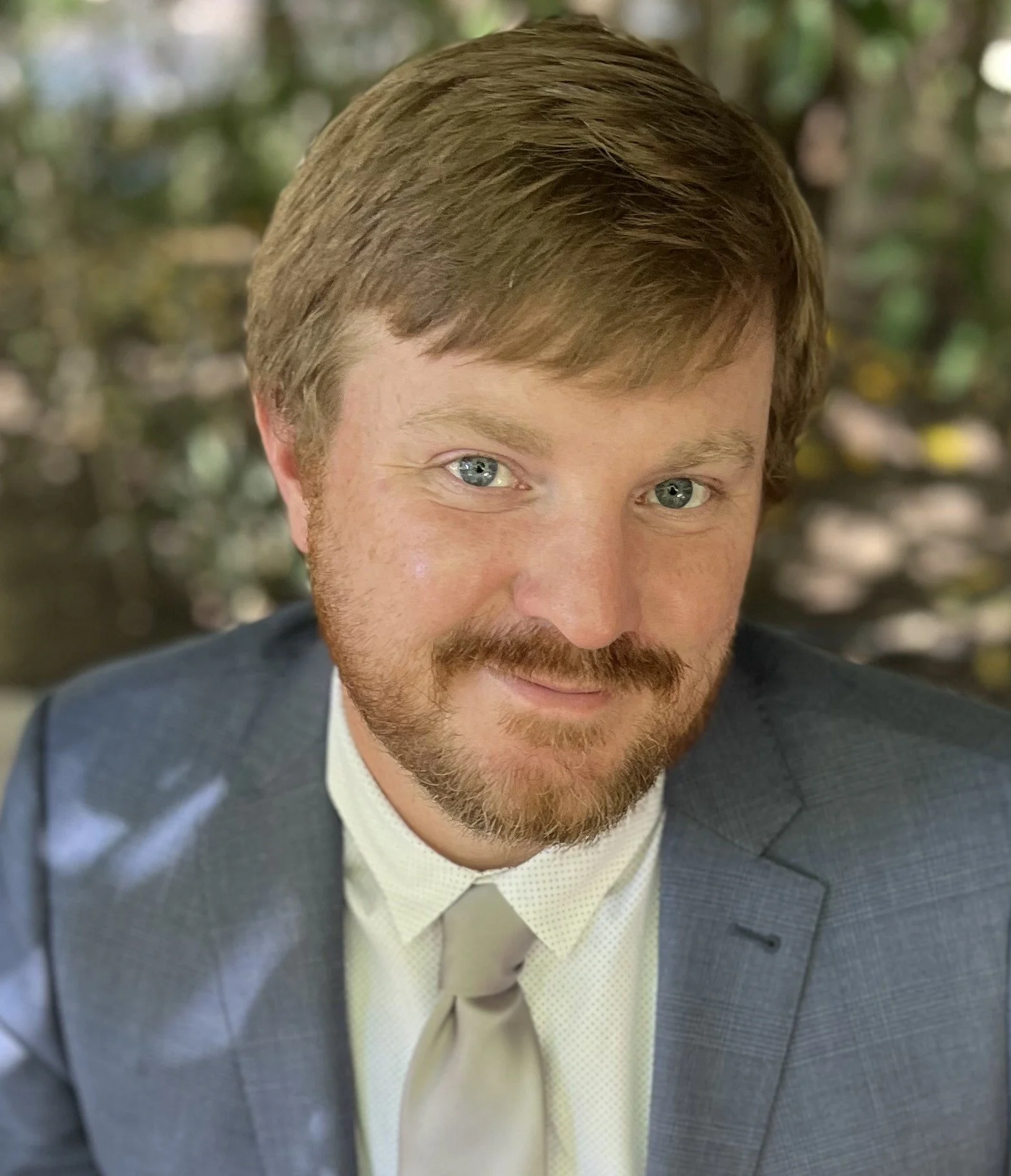
Andrew Bernard, CPA, is the founder of Strong Bear Consulting and a former Controller with more than ten years of finance experience in the entertainment industry across both corporate and production environments.
His work has included complex entities, project-based budgets, management reporting, financial modeling, accounting-system transitions, and the design of financial structures that need to serve both day-to-day operations and leadership decision-making.
That experience now informs his work with growing churches and other complex organizations—helping leaders build financial systems that are easier to understand, maintain, and use.
Andrew has experience with Sage Intacct, QuickBooks, multi-entity structures, and multi-location reporting.